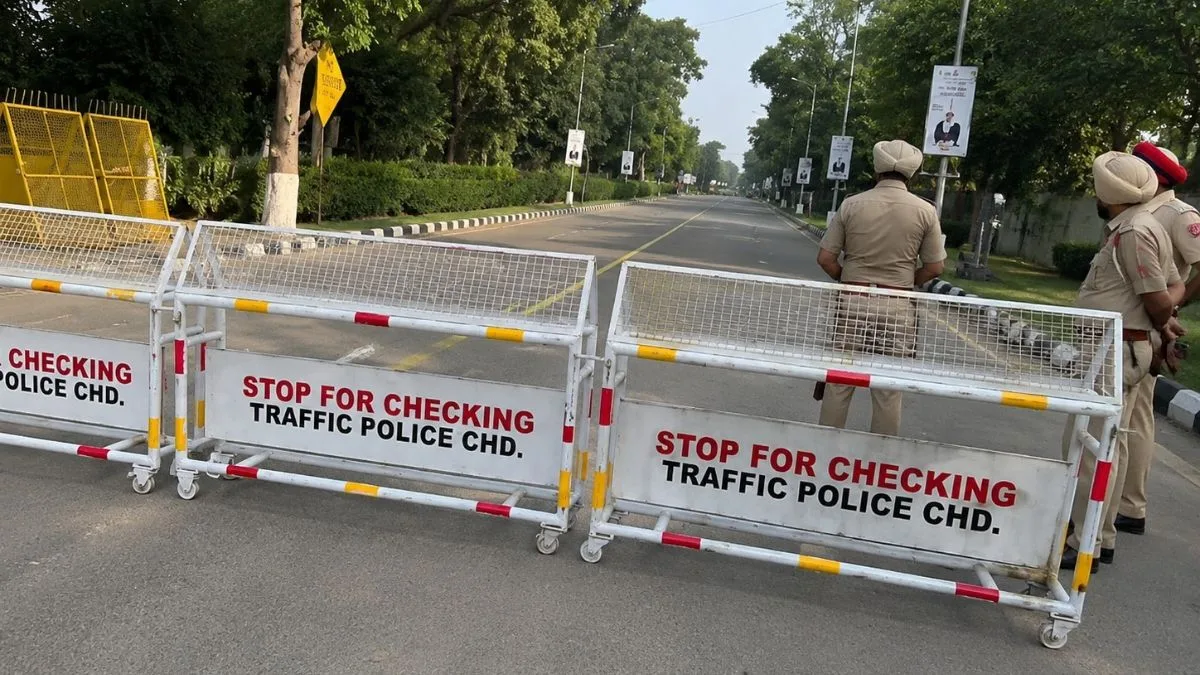
A little-known 500-metre stretch in Chandigarh, inaccessible to the public for nearly 45 years, came back into use on Friday as Prime Minister Narendra Modi’s convoy passed through the high-security corridor during his visit to the city.
The road has remained shut for ordinary traffic since 1980, when Punjab witnessed the rise of militancy and security arrangements around key government installations were tightened. Since then, the route has largely been reserved for VVIP movement, while public entry has continued to remain prohibited.
Advertisement
Running from the Nayagaon barrier towards Raj Bhavan, the Punjab and Haryana High Court, the Civil Secretariat and the official residences of the Punjab and Haryana chief ministers, the corridor is considered the quickest and safest approach for protected convoys travelling from the Rajendra Park helipad to Punjab Engineering College (PEC) and adjoining government complexes.
Its closure, however, has remained controversial. Residents of Nayagaon and surrounding villages, besides lawyers, students and government employees, have repeatedly argued that the barricaded road forces them to travel several extra kilometres every day to reach the High Court, Secretariat and nearby offices. They say reopening the stretch would save time, reduce fuel consumption and ease traffic on adjoining roads.
The dispute reached the Punjab and Haryana High Court through a public interest litigation filed in 2014. Nearly a decade later, the court directed the Chandigarh Administration to open the road on a trial basis during daytime hours, observing that prolonged restrictions had caused avoidable inconvenience to thousands of commuters.
The order had barely come into effect when the Punjab government approached the Supreme Court. It argued that the unrestricted movement of people near the Chief Minister’s residence and other sensitive locations could compromise security. Following this submission, the Supreme Court stayed the High Court’s directives; consequently, the road remained closed, and the matter is still awaiting a final verdict.
Even so, the route continues to be activated whenever the Prime Minister, the President or other constitutional dignitaries visit Chandigarh. Security officials prefer the corridor because it is easier to sanitise, involves fewer traffic diversions and enables protected convoys to move swiftly through one of the city’s most sensitive zones.